
One of the most expensive mistakes a CEO can make is becoming exceptionally good at solving a problem the business never needed to solve.
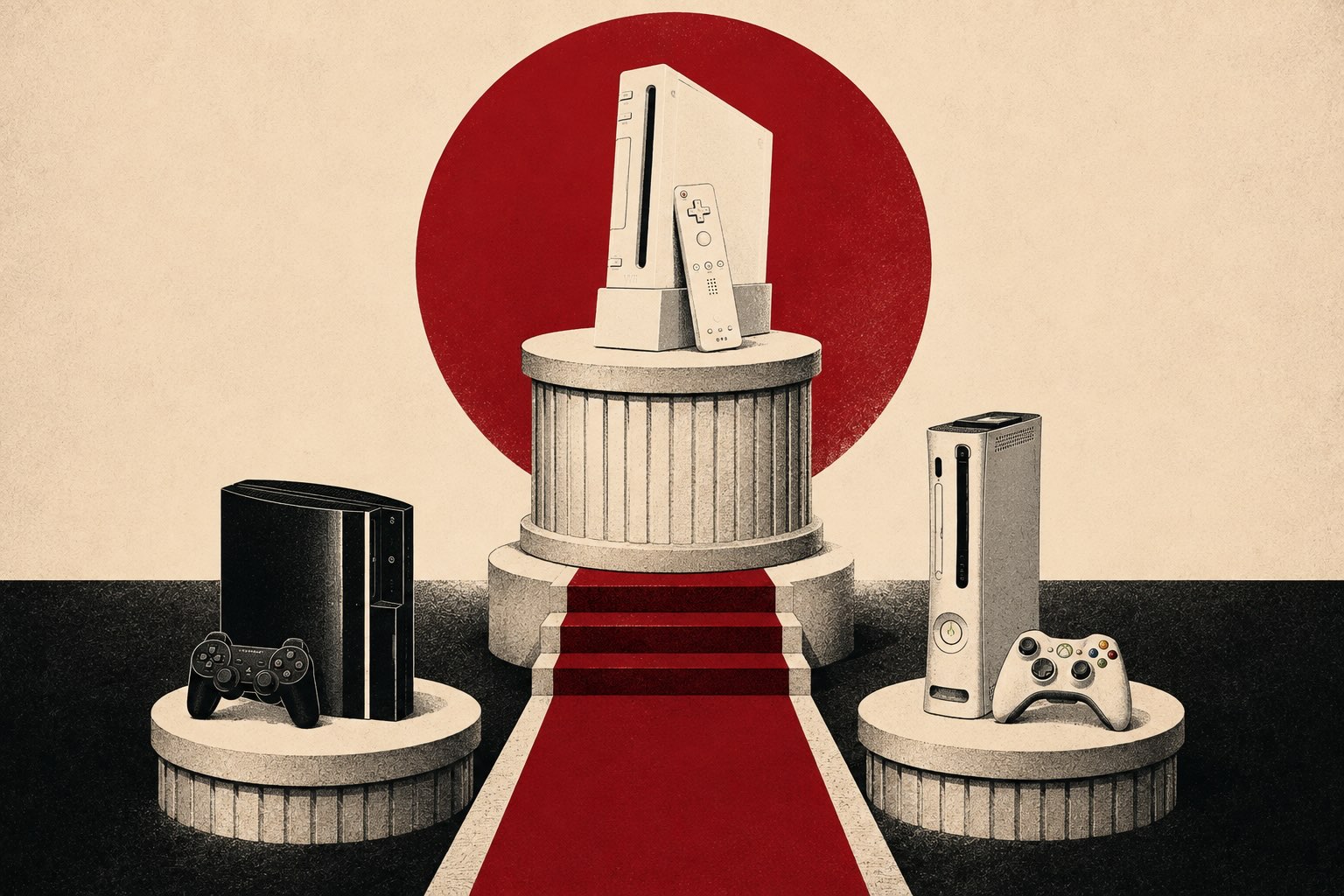
In the early 2000s, Nintendo faced formidable competitors.
Sony's PlayStation and Microsoft's Xbox were competing in an increasingly sophisticated console market. Processing power mattered. Graphics mattered. Technical specifications mattered. The industry appeared to be heading towards an arms race in which each generation of hardware needed to be faster, more powerful and more visually impressive than the last.
Nintendo could have accepted that definition of the problem.
How do we build a more powerful console?
Instead, it eventually asked a much more consequential question:
Why are we competing only for people who already play video games?
That change in question helped produce the Nintendo Wii.
And it contains an important lesson for any CEO watching the same expensive problem return despite repeated attempts to solve it.
The obvious problem is dangerously seductive
Imagine sitting in Nintendo's boardroom.
Your competitors have stronger hardware. Their products are attracting serious gamers. The technology race is accelerating.
The evidence appears overwhelming.
So the logical responses are equally obvious.
Invest more in processing power.
Improve graphics.
Build technically superior hardware.
Win developers.
Fight harder for market share.
None of those responses would have been absurd.
That is what makes the story important.
The wrong problem rarely looks ridiculous. It usually looks completely reasonable.
And once leadership accepts it, an entire organisation can mobilise around solving it.
Budgets follow.
People are hired.
Projects commence.
KPIs are created.
Consultants arrive.
Progress is reported.
The organisation becomes extraordinarily busy.
Yet it may simply be getting better at answering the wrong question.
Nintendo changed the question
Nintendo's eventual response with the Wii was dramatically different.
Instead of attempting to beat Sony and Microsoft primarily through processing power and graphical performance, Nintendo emphasised accessibility, simplicity and a novel motion-controlled interface.
The Wii could be played by people who might never describe themselves as gamers.
Children could understand it.
Parents could participate.
Grandparents could participate.
Families could play together.
The strategic question had shifted from:
How do we win more gamers from our competitors?
to something closer to:
How do we make gaming attractive to millions of people who aren't currently participating?
That is not merely a different solution.
It is a different problem.
Recurring problems can be framing problems
This distinction matters enormously inside established organisations.
When a problem recurs, the instinct is usually to question the solution.
The transformation wasn't executed properly.
The technology wasn't capable enough.
The restructure didn't go far enough.
The consultant misunderstood the business.
Managers weren't sufficiently accountable.
Employees resisted change.
So another solution is commissioned.
Then another.
Each recurrence increases the cost.
But there is another possibility that receives far less attention:
What if the solutions keep failing because leadership keeps solving the same incorrectly framed problem?
Nintendo could have built a faster machine, spent more on development and fought harder for existing customers.
Even success might have trapped it deeper inside someone else's competition.
Instead, it questioned the assumption underneath the strategy.
Look beneath the decision
Recurring problems often become clearer when CEOs trace them backwards.
Impacts reveal what is happening.
Those impacts are created by decisions.
Decisions are influenced by behaviours.
Behaviours make sense because of underlying assumptions.
And those assumptions are often reinforced by organisational or market conditions.
Nintendo's apparent competitive problem could easily have produced an assumption such as:
Serious competitive advantage requires superior hardware.
That assumption encourages particular behaviours: benchmarking competitors, comparing specifications, prioritising technical performance and investing heavily in incremental superiority.
Those behaviours produce predictable investment decisions.
And those decisions create predictable outcomes.
The important breakthrough occurs when somebody questions the assumption rather than merely improving the decision.
Better can be a strategic trap
This is particularly dangerous because executives are trained to improve things.
Better quality.
Better productivity.
Better technology.
Better customer service.
Better execution.
Usually that instinct is valuable.
But "better" only matters if the underlying problem has been correctly defined.
A newspaper can become the best newspaper in a shrinking newspaper market.
A retailer can create the industry's most efficient stores while customers migrate online.
A manufacturer can produce the highest-quality product while customers choose an inferior alternative because it is dramatically easier to use.
A company can increase market share while the entire market disappears beneath it.
Being better at yesterday's game is not necessarily progress.
Sometimes it is simply more sophisticated karamawari: enormous effort without meaningful forward movement.
Before approving another fix, challenge the problem
For CEOs dealing with recurring problems, Nintendo offers a useful discipline.
Before asking what should be done differently, ask whether the organisation has defined the problem correctly.
What assumptions are hidden inside our diagnosis?
What are we treating as unquestionably true?
What are our competitors doing that we have automatically assumed we must also do?
What customer behaviour are we overlooking?
What if the apparent constraint disappeared?
And perhaps most importantly:
If we solved this problem perfectly, would the outcome we actually care about necessarily improve?
Nintendo didn't escape its predicament by finding a better answer to the industry's prevailing question.
It escaped by refusing to accept that the prevailing question was the one that mattered.
For CEOs watching recurring problems consume another budget, another transformation and another year of management attention, that distinction is worth examining carefully.
What if your organisation doesn't need a better solution to the problem it keeps fighting, but the courage to ask whether it has been fighting the wrong problem all along?


0 Comments