
Some of the most expensive recurring problems are not failures of the system. They are consequences of the system working exactly as it was designed to work.
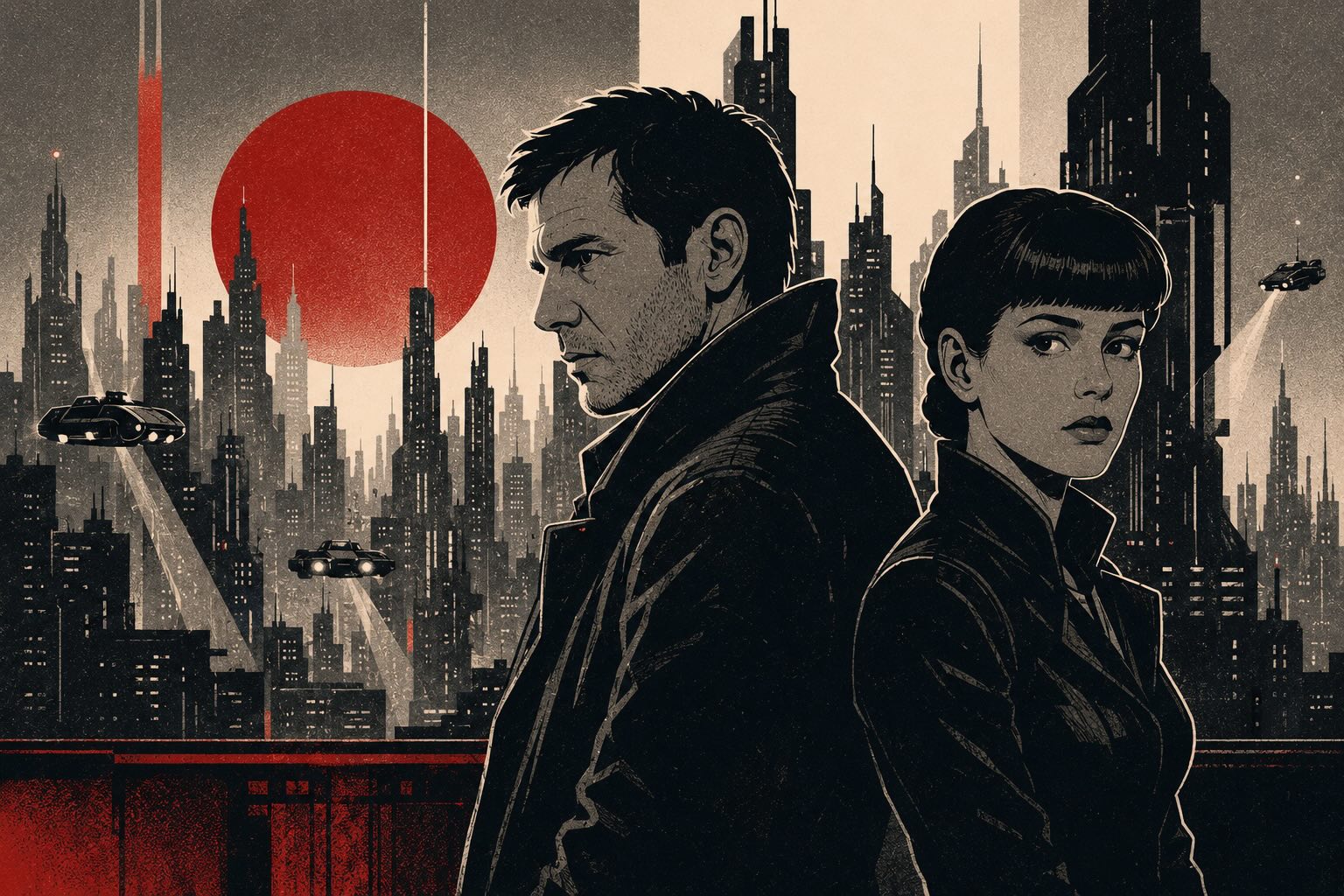
Ridley Scott's Blade Runner is remembered for replicants, rain-soaked Los Angeles and the uncomfortable question of what it means to be human.
But beneath that is another useful lesson for CEOs dealing with problems that refuse to disappear.
The world of Blade Runner keeps trying to eliminate dangerous outcomes without seriously confronting the conditions that created them.
And that is remarkably close to karamawari.
The problem is obvious. Until it isn't.
At the beginning, the problem appears straightforward.
Replicants have returned illegally to Earth. They are considered dangerous. Rick Deckard's job is to find them and "retire" them.
Problem identified. Solution defined. Specialist assigned.
It resembles how organisations often approach recurring problems.
Customer complaints increase, so fix Customer Service.
Costs rise, so launch a cost programme.
A project fails, so replace the project leader.
Employees leave, so improve retention.
Risk incidents increase, so strengthen controls.
The organisation starts with the visible manifestation and works backwards just far enough to identify something it can act upon.
Blade Runner gradually makes that framing uncomfortable.
Because the replicants are not simply malfunctioning machines.
They are products of decisions made by the system itself.
Tyrell created the conditions
The Tyrell Corporation created replicants that were extraordinarily capable, then deliberately limited their lifespans.
That decision becomes crucial.
Roy Batty and the other replicants are not merely creating chaos for its own sake. They have returned because they want something deeply consequential: more life.
Their behaviour makes considerably more sense once we understand the conditions surrounding it.
That distinction matters in organisations.
A leadership team might describe employees as resistant, functions as territorial, managers as risk-averse or executives as unwilling to escalate bad news.
But what if those behaviours make sense?
Perhaps people have previously been punished for raising problems.
Perhaps bonuses reward functional performance while leadership asks for collaboration.
Perhaps ambitious targets make transparency personally dangerous.
Perhaps decision rights are unclear.
Perhaps short-term delivery repeatedly wins over long-term prevention.
The behaviour may be undesirable while still being entirely understandable.
Before trying to change the behaviour, ask what conditions keep making it rational.
The Blade Runner is the expensive workaround
There is another fascinating organisational analogy.
Why does the Blade Runner exist?
Because the system needs someone to deal with the consequences of another part of the system.
Organisations create their own Blade Runners all the time.
They are the experienced manager who repeatedly rescues failing projects.
The executive who personally resolves customer escalations.
The finance team performing endless reconciliations between incompatible systems.
The operations team correcting errors created upstream.
The compliance function adding controls around a process that continues generating risk.
These people often look invaluable.
And they are.
But their indispensability can conceal something important.
The organisation has created an expensive capability for managing a problem it continues to manufacture.
The better the rescue mechanism becomes, the easier it can be to tolerate the conditions creating the need for rescue.
That is classic karamawari: enormous effort, considerable competence, substantial expenditure, yet surprisingly little structural progress.
Every recurrence is evidence
Imagine an organisation repeatedly experiencing the same operational failure.
Each incident is investigated.
Actions are allocated.
Controls are strengthened.
People are retrained.
Dashboards improve.
The incident disappears.
Then six months later, something remarkably similar happens.
Leadership naturally asks:
Why didn't the fix work?
There is a more revealing question:
What survived the fix?
Something did.
An assumption.
An incentive.
A conflicting objective.
A decision rule.
A structural dependency.
An authority gap.
A cultural expectation.
A commercial trade-off nobody wanted to confront.
If the conditions capable of producing the problem remain intact, the organisation has not necessarily eliminated the problem. It may simply have interrupted its expression.
Beware the solution that perpetuates the system
Deckard's assignment addresses the immediate threat. It does not address the system producing replicants, controlling their lives and creating the conditions that motivate their return.
That distinction matters enormously for CEOs.
There is nothing inherently wrong with containment.
Sometimes the immediate problem genuinely must be contained first.
Customers need protecting. Operations need restoring. Risk needs controlling. Cash needs preserving.
The mistake is confusing containment with resolution.
If the organisation repeatedly needs heroic intervention, emergency controls, remediation programmes or executive escalation, those mechanisms deserve examination themselves.
They may be evidence that the underlying system remains untouched.
Start one level further back
Recurring problems become much easier to understand when leadership stops asking only:
"What went wrong?"
and starts tracing backwards:
Impacts → Decisions → Behaviours → Assumptions → Conditions
What happened?
What decisions produced it?
What behaviours shaped those decisions?
What assumptions made those behaviours seem appropriate?
And what organisational conditions taught people to hold those assumptions?
That final question is where many investigations stop too early.
It is also where some of the most valuable answers live.
Don't retire the symptom
Perhaps the most powerful lesson from Blade Runner is that the distinction between problem and consequence becomes increasingly difficult to maintain.
What initially appears to be the threat gradually becomes evidence of something much larger.
CEOs facing stubborn recurring problems should be suspicious when the villain is too easy to identify.
The difficult employee.
The underperforming function.
The obsolete technology.
The incompetent supplier.
The resistant middle manager.
They may indeed be part of the problem.
But recurring problems demand another question.
Because if you remove the visible offender while preserving the conditions that made the outcome possible, another version may eventually take its place.
So when the same costly problem returns yet again, are you eliminating the thing causing it, or simply sending another Blade Runner to retire the latest thing your organisation has created?


0 Comments