
Some organisations become so good at resisting change that they eventually become incapable of surviving reality.
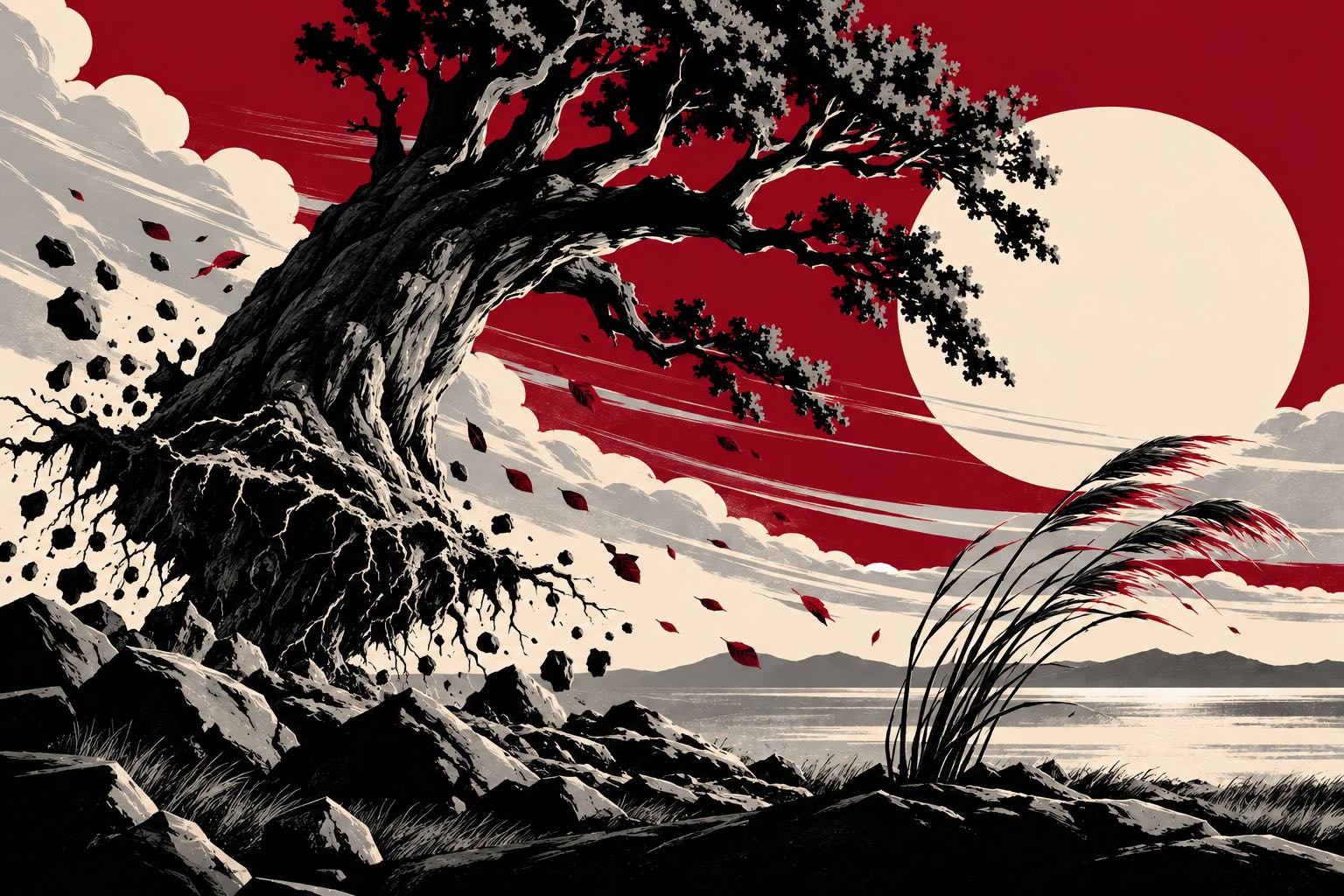
There is an old fable about an oak tree and a reed.
The oak is enormous. Deeply rooted. Solid. Powerful. It looks at the slender reed bending in the wind and regards its flexibility as weakness.
Then the storm arrives.
The reed bends almost to the ground.
The oak refuses to move.
Eventually, the wind becomes stronger than the oak's ability to resist it. The great tree is uprooted.
When the storm passes, the reed rises again.
For CEOs dealing with recurring problems, there is an uncomfortable lesson hiding inside that simple story.
Sometimes what looks like organisational resilience is actually organisational rigidity.
When Strength Becomes the Problem
Organisations naturally develop ways of protecting themselves.
Processes become established. Controls are introduced. Governance matures. Reporting lines settle. Systems become embedded. Expertise accumulates. Ways of working become familiar.
Much of this is valuable.
It creates reliability.
But reliability can quietly become rigidity.
A process that once protected the organisation becomes almost impossible to challenge.
A control introduced after an incident survives long after the original risk has changed.
A successful business model becomes evidence that the organisation should continue operating in the same way.
Experience becomes precedent.
Precedent becomes expectation.
Expectation eventually becomes:
"This is how we do things here."
The organisation has become stronger.
But stronger against what?
The Conditions Have Changed
One of the most dangerous characteristics of recurring organisational problems is that the organisation itself may not be standing still.
The environment around it is changing.
Customers change.
Technology changes.
Competitors change.
Regulation changes.
Employee expectations change.
Costs change.
Supply chains change.
Risk changes.
The conditions under which previous decisions made sense can disappear while the decisions themselves remain embedded in the organisation.
That creates an important distinction.
A decision can have been completely rational when it was made and completely inappropriate under today's conditions.
The problem isn't necessarily that someone got it wrong.
The problem is that the organisation kept yesterday's answer after reality changed the question.
Yesterday's Strength Can Become Today's Constraint
Imagine a company that suffered a significant financial control failure ten years ago.
Management responds appropriately.
Additional approvals are introduced. Reporting increases. Authority is centralised. Exceptions require executive sign-off.
The changes work.
The organisation becomes safer.
Over the following decade, however, technology improves. Controls become automated. Data becomes available in real time. The organisation grows. Customer expectations accelerate.
Yet those original approvals remain.
Nobody wants to remove them because they are associated with safety.
Eventually, decisions take too long. Managers escalate constantly. Executives become bottlenecks. Employees create workarounds. Customers become frustrated.
Leadership now has a speed problem.
So it launches a process improvement program.
But perhaps the process isn't really the problem.
Perhaps the organisation is still protecting itself from conditions that no longer exist.
The oak is strengthening its trunk while the wind has changed direction.
Recurring Problems Leave Clues
This is where persistent problems become valuable evidence.
If the same problem keeps returning despite reasonable attempts to solve it, something may be surviving each intervention.
A customer problem returns after retraining.
A delivery problem returns after restructuring.
A risk problem returns after introducing another control.
A productivity problem returns after implementing new technology.
A decision bottleneck returns after redesigning the process.
Rather than immediately asking:
"What should we change this time?"
Ask:
"What haven't we changed?"
Look at what survived every previous solution.
The same incentive?
The same assumption?
The same approval?
The same decision rights?
The same technology constraint?
The same management response?
The same belief about risk?
The same expectation from leadership?
Recurrence often tells us that something in the environment continues to make the unwanted outcome possible.
Rigidity Can Hide Behind Resilience
There is another complication.
Rigid organisations can look remarkably resilient.
Experienced managers know how to navigate the bureaucracy.
High performers know which approvals to accelerate.
Teams maintain spreadsheets around system limitations.
Executives intervene when decisions stall.
Customer teams repair relationships when processes fail.
The organisation keeps functioning.
Leadership sees resilience.
But what it may actually be seeing is compensation.
People are bending because the organisation won't.
And compensation has a cost.
Management attention.
Rework.
Delay.
Employee capacity.
Customer frustration.
Lost opportunities.
Eventually the organisation can become extraordinarily proficient at overcoming problems it should no longer have.
That is not resilience.
It is expensive adaptation to rigidity.
Don't Remove the Roots
The answer isn't constant change.
The reed survives because it bends, not because it has no roots.
Organisations need stability.
Purpose should provide stability.
Values can provide stability.
Sound governance provides stability.
Deep capability provides stability.
But stability of purpose does not require rigidity of method.
The challenge for CEOs is knowing what should remain deeply rooted and what must remain capable of moving.
That requires understanding why things exist.
Why does this approval exist?
Why is authority located here?
Why do we measure this?
Why does this committee exist?
Why is this process structured this way?
Why do we believe this risk requires this response?
And perhaps most importantly:
Do the conditions that made those choices sensible still exist?
Because sometimes the recurring problem isn't surviving because the organisation is too weak to eliminate it.
It is surviving because the organisation has become exceptionally strong at preserving the conditions that keep recreating it.
The oak teaches us that strength without adaptability can eventually become another form of weakness.
So what in your organisation are you currently calling strength, resilience or discipline that might actually be preventing you from bending to a reality that has already changed?


0 Comments