
Thinking for leaders dealing with persistent problems
Karamawari writes about the organisational patterns that make recurring problems difficult to see and expensive to leave unresolved: how evidence becomes representation, why reasonable fixes fail, where capacity disappears and what leaders can learn when the same outcome keeps returning.

The Most Dangerous Wolf in the Boardroom Looks Like Progress
The most dangerous problem in your organisation may be the one currently reassuring everyone that things are getting better. We are conditioned to look for danger in obvious places. A red dashboard....

Good to Great Is Not Enough When the Same Problem Keeps Coming Back
A company can have disciplined people, disciplined thought and disciplined action, yet still spend millions repeatedly solving the wrong problem. Jim Collins’ Good to Great has endured...

RoboCop’s Warning to CEOs: When the Fix Becomes Part of the Problem
Some recurring problems survive because the organisation keeps fixing the failure while preserving the conditions that created it. Paul Verhoeven’s 1987 film RoboCop looks like a violent...
The Best Practice Trap: When Someone Else’s Solution Becomes Your Next Problem
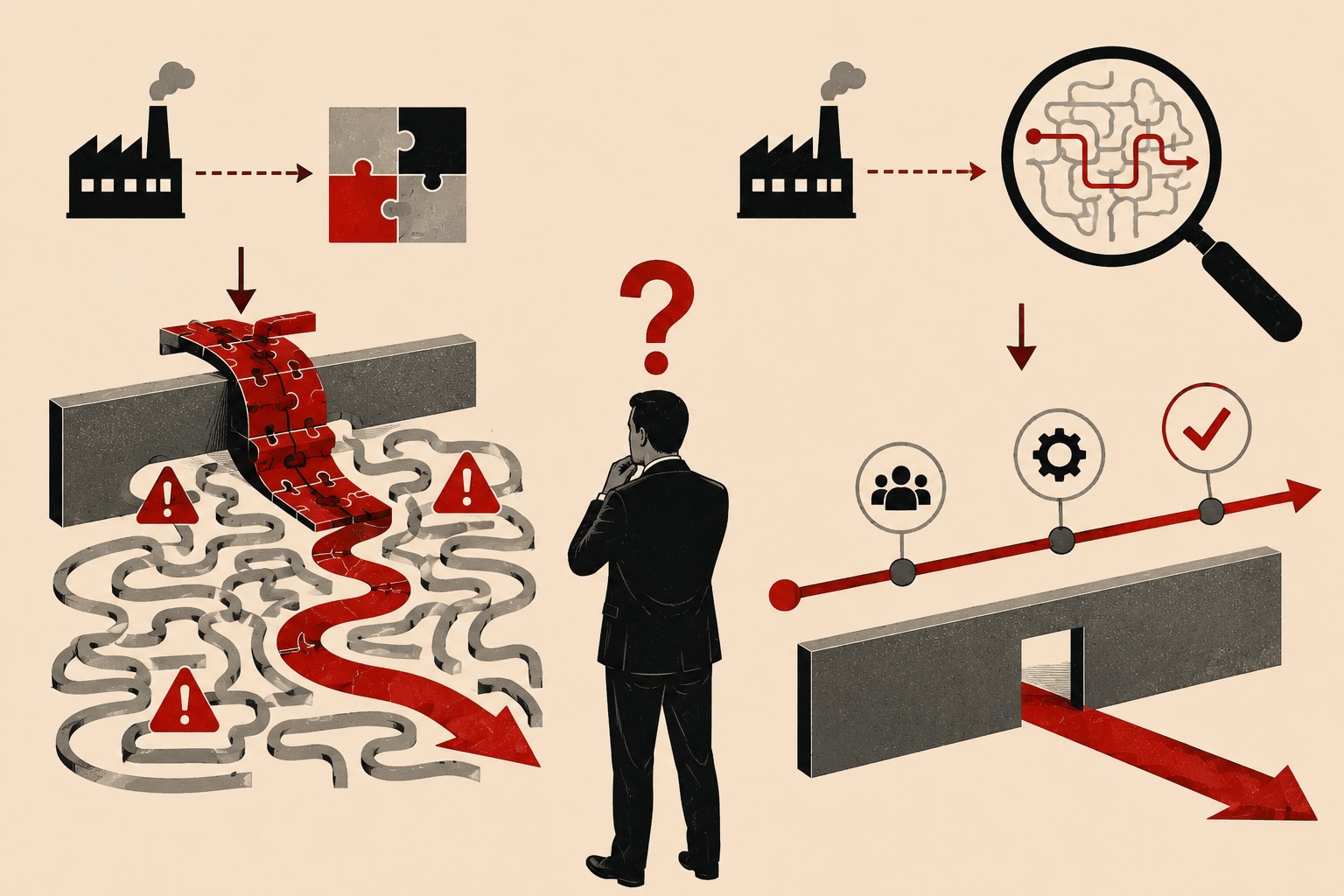
Few things create more expensive Karamawari than confidently solving your problem with an answer designed for somebody else’s. A recurring problem refuses to disappear. Leadership is frustrated....

The Painkiller Problem: Why Leaders Keep Treating Symptoms
The most expensive recurring problems are often not difficult to fix. They are difficult to diagnose, so organisations become exceptionally good at treating the wrong thing. A customer problem...

Every Organisation Has a Four-Minute Mile
Some recurring problems become so familiar that organisations stop treating them as problems to solve and start treating them as limits they must live within. For years, the four-minute mile...

