
The most expensive recurring problems are often not difficult to fix. They are difficult to diagnose, so organisations become exceptionally good at treating the wrong thing.
A customer problem returns. Costs rise again. Another project slips. Quality deteriorates. Employee turnover increases. A control fails for the third time.
Leadership responds.
More resources are allocated. A new process is introduced. Technology is purchased. Accountabilities are clarified. Training is delivered. Someone may even be replaced.
Performance improves.
Everyone exhales.
Then the problem comes back.
This is where many organisations become trapped in karamawari, 空回り: enormous effort that creates activity without equivalent forward progress.
The problem is not that leaders are doing nothing.
It is that symptoms are much easier to see, measure and treat than the conditions producing them.
Symptoms are seductive
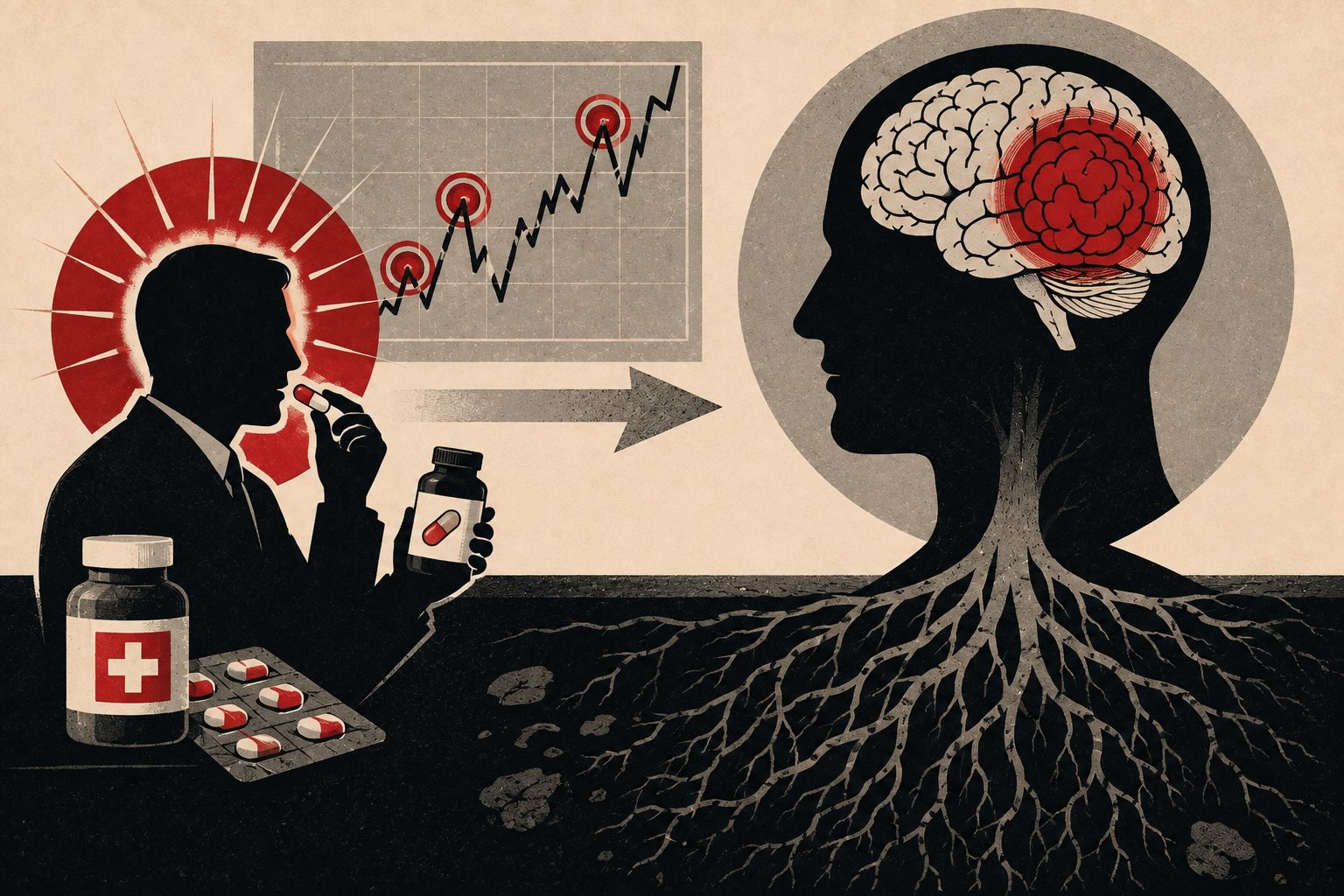
Imagine someone suffering recurring headaches.
Painkillers make perfect sense. The headache disappears, so the intervention appears successful.
If the headache returns, take another tablet.
If it becomes worse, increase the dose or try something stronger.
But imagine the headache is being caused by a brain tumour.
The painkiller is still doing exactly what it was designed to do. The mistake is not the treatment itself. The mistake is confusing relief from the symptom with resolution of the problem.
Organisations do this constantly.
Customer complaints increase, so additional customer-service resources are deployed.
Projects miss deadlines, so project governance is strengthened.
Costs rise, so spending controls are introduced.
Errors increase, so employees receive more training.
Decisions take too long, so another approval process is created.
Each response can be entirely reasonable.
And each can provide relief.
That is precisely what makes symptom treatment so dangerous.
Temporary improvement creates misleading evidence
A failed intervention is relatively easy to challenge.
A partially successful intervention is much harder.
Suppose a recurring operational problem costs $5 million each year. Leadership launches a remediation programme. The following year, losses fall to $2 million.
Success?
Possibly.
But what if nothing fundamental changed?
Perhaps extraordinary management attention suppressed the problem. Additional people absorbed the workload. Exceptions were manually managed. Senior leaders intervened personally. Employees worked longer hours.
The symptom improved while the generating conditions remained.
Then attention moves elsewhere.
The workarounds become harder to sustain.
The problem returns.
Now leadership concludes the original solution was insufficient and spends even more strengthening it.
The painkiller becomes stronger while the tumour continues growing.
Why smart leaders get trapped
CEOs rarely deliberately choose superficial solutions.
The difficulty is that organisations are structured to make symptoms highly visible and causes comparatively obscure.
Financial reports show the cost.
Dashboards show the missed target.
Risk reports show the breach.
Customer metrics show dissatisfaction.
Project reports show delay.
These are impacts.
The causes may sit several layers beneath them.
A repeated capacity problem might originate in commitments being made before delivery capacity is tested.
That behaviour might persist because leaders assume saying no will damage growth.
That assumption might make sense because commercial performance is rewarded immediately while delivery consequences appear months later elsewhere in the organisation.
By the time the impact reaches the CEO, the chain that produced it has been compressed into a number on a slide.
The symptom is visible.
The system that generated it is not.
Pressure makes diagnosis harder
There is another problem.
When something hurts, people want the pain stopped.
CEOs face the same pressure.
Customers are angry. The board wants answers. Earnings are affected. Regulators are asking questions. Employees are frustrated.
"Let's spend three months understanding this properly" can sound dangerously passive.
"Here are the ten actions we are taking" sounds reassuringly decisive.
Activity creates psychological relief.
Budgets demonstrate commitment.
Programmes create accountability.
Dashboards demonstrate control.
None of those things proves the organisation understands the problem.
In fact, urgency can shorten the distance between symptom and solution precisely when leadership should be lengthening the distance between observation and conclusion.
Recurrence changes the burden of proof
The first occurrence may reasonably be treated as an incident.
The second deserves curiosity.
By the third or fourth recurrence, leadership should question the diagnosis itself.
If the same outcome survives new people, new processes, new technology, new governance and repeated remediation, that history is evidence.
Something capable of recreating the problem survived every intervention.
Instead of asking, "What should we try next?", put the previous solutions beside one another.
Ask:
What did each intervention change?
What improved temporarily?
What returned?
Most importantly, what did every intervention leave untouched?
That final question takes the investigation somewhere different.
Follow the problem backwards
Recurring problems become easier to understand when leadership stops beginning with the latest incident and instead traces the pattern backwards.
Start with the impact.
What decisions repeatedly preceded it?
What behaviours made those decisions likely?
What assumptions made those behaviours reasonable?
What organisational conditions keep reinforcing those assumptions?
The chain might look something like this:
Conditions → Assumptions → Behaviours → Decisions → Impacts
The customer complaint may therefore be the headache.
The failed handover may be another headache.
The cost overrun may be another.
The executive escalation may be another.
They look different because symptoms often appear in different places.
But they may all be expressions of the same underlying condition.
Stop rewarding relief as resolution
There is nothing wrong with treating symptoms.
Pain matters. Customers need answers. Projects need rescuing. Risks sometimes require immediate containment.
The mistake is stopping there.
Containment and resolution are different management activities.
One reduces today's consequences.
The other reduces the probability of tomorrow's recurrence.
For a CEO fed up with repeatedly paying for the same problems, that distinction is commercially significant. Every recurrence consumes margin, capacity and management attention that could have been invested somewhere more productive.
Eventually, the greatest cost is not another failed fix.
It is an organisation becoming so accustomed to taking painkillers that nobody remembers to ask why the headache keeps returning.
Which problem in your organisation are you currently congratulating yourselves for managing successfully when you should be asking what keeps making the pain return?


0 Comments